

With the rise of technology, the importance of adaptation becomes hastily evident in terms of...
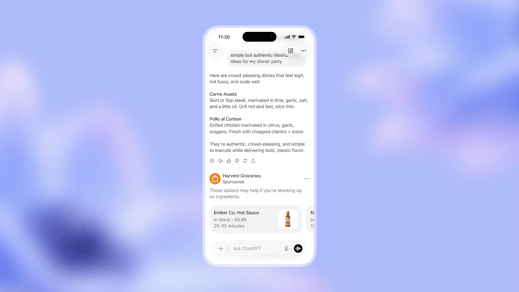
OpenAI has confirmed it will soon begin testing advertising inside ChatGPT- starting in the US, and limited to Free and ChatGPT Go users. For now, Pro, Business and Enterprise accounts will remain ad-free.
At first glance, this might sound like just another platform monetisation move. But zoom out slightly, and it tells us something much more important about where AI, search and patient discovery are heading.
What’s actually being tested?
Ads will appear:
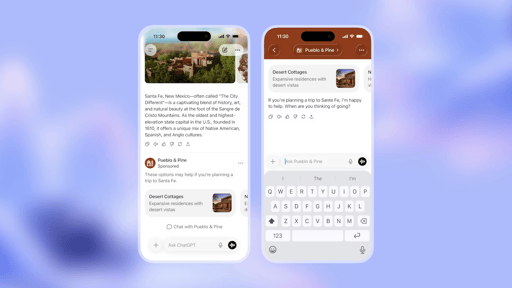
- Below ChatGPT responses, not inside them
- Clearly labelled as Sponsored
- Triggered only when contextually relevant to the conversation
Crucially:
- Ads do not influence ChatGPT’s answers
- Conversations and user data are not shared with advertisers
- Users can control or disable ad personalisation
- Ads will not appear near sensitive or regulated topics, including health, mental health and politics
- Ads will not be shown to under-18s
This is a cautious, tightly governed rollout.
Why healthcare (including orthodontics) won’t be included for now
OpenAI has been explicit: healthcare content is excluded from early ad testing.
That means orthodontic practices should not expect to see - or run - ChatGPT ads during this initial phase.
But that’s not a dead end. It’s a signal for us.
This is a trust-first test.
OpenAI is deliberately avoiding sensitive sectors while it validates:
- User experience
- Relevance
- Transparency
- Feedback loops
If (or when) ads expand beyond this phase, healthcare will inevitably be part of that conversation - especially as AI becomes a mainstream research tool for patients.
The bigger shift: ChatGPT is aligning with search behaviour
This isn’t about OpenAI “becoming Google”.
It’s about OpenAI converging with how search actually works.
ChatGPT didn’t start as a search engine. It started as a large language model - built to generate and reason, not retrieve links.
But users changed that.
People now use ChatGPT to:
- Compare options
- Research treatments
- Ask “is this right for me?” questions
- Explore costs, pros and cons, timing, suitability
That’s search behaviour - just without keywords.
As conversational research became the dominant use case, ads became the next logical layer, not an afterthought.
Not because OpenAI wants to sell ads. But because discovery naturally leads there.
Why this matters for us (even now)
We don’t need to “do” anything today.
But we do need to understand what this unlocks long-term.
For practices already feeling like they're plateauing with their paid ads performance and seeing heavier competition for the same high-intent keywords, this conversational discovery represents a structural shift, not a channel tweak.
Future patient journeys won’t always start with "Orthodontist near me", instead they'll search:
“Is Invisalign or braces better for my teenager?”
“How long does orthodontic treatment usually take?”
“What should I expect at a first consultation?”
And increasingly, those conversations will happen inside AI interfaces, not search engines.
Ads are only one piece of the puzzle
Whether or not orthodontic ads appear in ChatGPT later, the real opportunity sits underneath:
- Authority-driven content
- Clear, helpful explanations
- Strong EEAT signals
- Brands that educate, not just sell
Because in a conversational world, the practices that win are the ones AI trusts to explain things well.
Ads may amplify visibility.
But credibility earns it.
Ultimately:
ChatGPT ads aren’t something we need to act on today.
But they are something we should be paying attention to - and we are.
Not because ads are coming. But because discovery is changing.
And once again, those who understand the shift early will be the ones best positioned when it becomes mainstream.
#PaidAds #ChatGPT #AI
Would you like to know more?